
On this page
- Why does fascia rot behind a gutter?
- What are the signs?
- How is rotten fascia replaced?
- What should the new fascia be made of?
- Drip edge or gutter apron?
- What about the soffit?
- Which walls rot first?
- What about carpenter bees and woodpeckers?
- What does fascia repair cost?
- Who does the work?
- What should I ask?
- Parts of the roof edge
- Which Chattanooga houses have the most fascia trouble?
- How long does the repair last?
- Can fascia be repaired without removing the whole gutter?
Why does fascia rot behind a gutter?
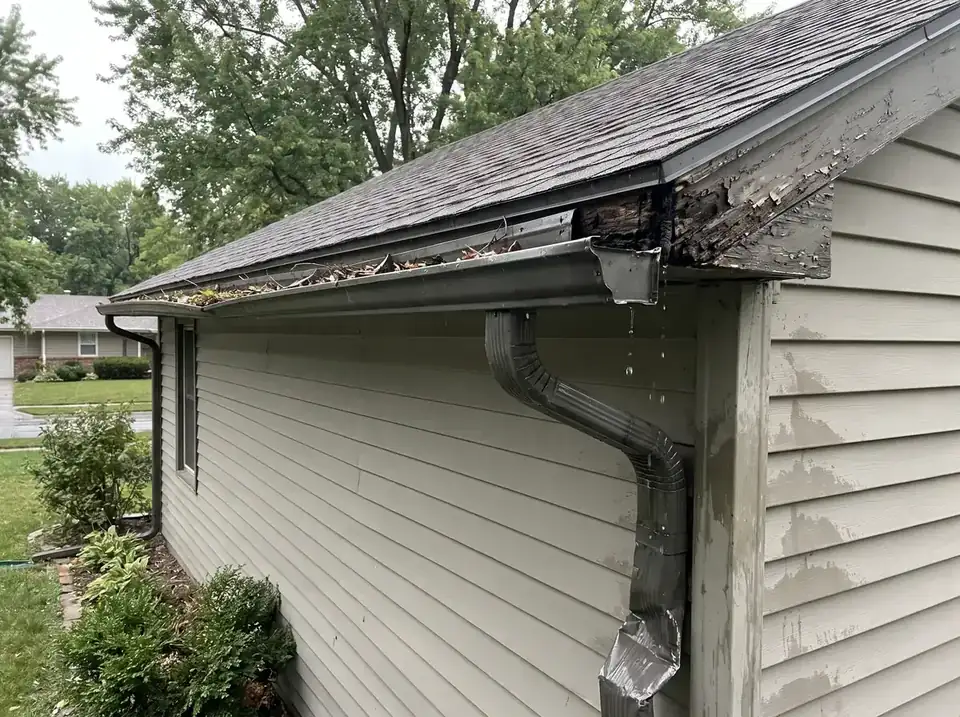
Wood needs to dry out between wettings. Behind a gutter it is shaded and sheltered from wind, so it dries slowly. Chattanooga has a humid subtropical climate and rain in every month. Give that board a steady source of water and it rots in a few years.
| Source of water | Why |
|---|---|
| No drip edge, or a short one | Water curls under the shingles and down the board |
| Gutter overflowing at the back | Back edge set lower than the front, or gutter full |
| Leaking corners and end caps | Drips land on the wood below |
| Failed paint | Bare end grain drinks water |
What are the signs?
- Blistered or peeling paint behind the gutter
- Dark stains under the roof edge
- A gutter that sags again soon after re-fixing
- Wood that gives under a screwdriver
- Carpenter bees, wasps or squirrels at the eave
How is rotten fascia replaced?
- The gutter is taken down along the bad stretch
- Rotten board is cut back to sound wood at a rafter
- Rafter tails are checked. Decayed ends are cut and sistered
- New board is primed on every face and every cut end, then fixed
- A drip edge or gutter apron is fitted so water lands in the gutter
- The gutter is re-hung on new hangers
A straight single-storey run takes a few hours. Corners, returns and tall walls take longer.
What should the new fascia be made of?
| Material | Notes |
|---|---|
| Primed pine or fir | Matches what is there. Must be kept painted |
| PVC or composite | Cannot rot. Costs more. Good on walls that stay damp |
| Aluminum wrap over wood | Protects sound, dry wood. Never wrap over rot |
Drip edge or gutter apron?
| Flashing | Shape | When it is used |
|---|---|---|
| Drip edge | Narrow, with a small outward kick | Fitted with a new roof |
| Gutter apron | Wide L that laps into the gutter | Added later, slid under the first shingles |
Either one keeps water off the board. An apron is the fix for an existing roof with nothing there.
What about the soffit?
The soffit is the underside of the overhang. It rots when fascia leaks travel inward or a blocked gutter backs water under the shingles. Vented soffit also feeds air to the attic, so panels are replaced like for like.
Which walls rot first?
North and east walls under trees, which stay damp longest. On hillside houses, the tall downhill eave is the one nobody inspects, so rot there is often advanced before it is noticed.
What about carpenter bees and woodpeckers?
Carpenter bees drill neat round holes in bare or weathered fascia. Woodpeckers then open the holes up. Painted, wrapped or PVC boards attract them far less. Holes are filled and painted before the gutter goes back.
What does fascia repair cost?
It is charged per foot on top of gutter work. The rate depends on board size, material, rafter-tail repair and height. Get the per-foot figure in writing before the gutter comes off, because the full extent only shows then.
Who does the work?
Many gutter contractors replace fascia as part of the job. Rot that runs into rafters or roof decking is for a carpenter or roofer. In a historic district, matching the original profile may be required. Ask the city.
What should I ask?
- What is the price per foot, and for what board?
- Will it be primed on all sides and ends?
- Will you fit an apron or drip edge?
- What if the rafter tails are bad?
- Is it better value to renew the gutter on that wall too?
Parts of the roof edge
| Word | What it means |
|---|---|
| Fascia | The long board that caps the rafter ends. Gutters are screwed to it |
| Soffit | The panel under the roof overhang, running from fascia back to the house wall |
| Rafter tail | The last few inches of a rafter beyond the wall. The fascia fastens to these |
| Drip edge | A strip of metal flashing tucked under the bottom course of shingles. It tips water off the roof and into the gutter |
| Gutter apron | A deeper flashing bent like an L. One leg goes under the shingles, the other hangs inside the gutter |
| Hidden hanger | A bracket that sits inside the gutter and takes a long screw through the gutter back into the wood |
Which Chattanooga houses have the most fascia trouble?
Older houses with no drip edge, houses under dense canopy where nothing dries, and hillside houses whose tall wall goes unchecked. In historic districts the original boards may be a century old.
How long does the repair last?
A primed, painted or wrapped board under a working drip edge should last decades. One left bare behind a leaking gutter will be soft again in a few years.
Can fascia be repaired without removing the whole gutter?
Only the affected length needs to come down. The rest of the run stays up if it is sound.